
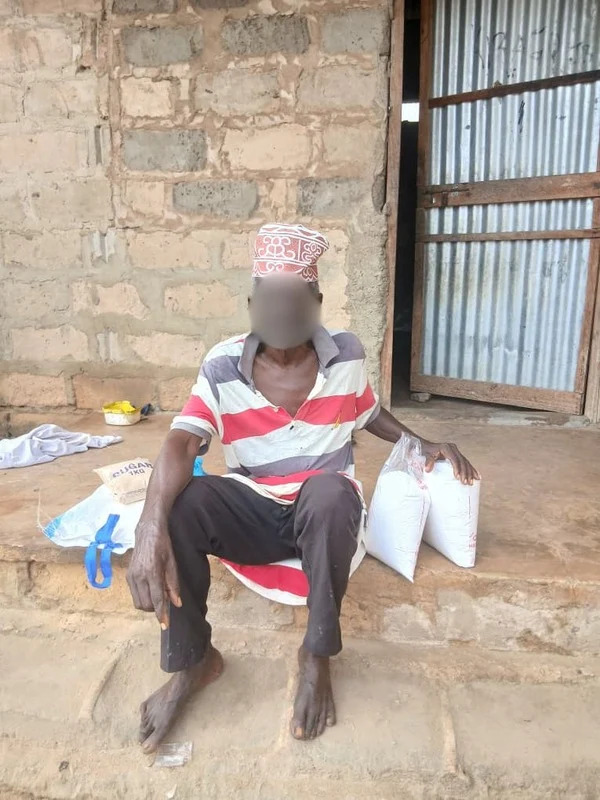
Meet J.k, one of our elderly beneficiaries. For privacy reasons we will refer to him as J.K.
On 10 May 2026, our team visited J.K’s home for a routine health check-up. As usual, we checked his blood pressure. When the reading appeared. It showed 220 mmHg—a level that is far from normal.
Naturally, we asked Mr. John how he was feeling.
His answer?
“I feel fine.”
Now, J.K may have felt fine, but his blood pressure clearly had other plans. This is exactly why high blood pressure is often called the “silent killer”. It can reach dangerous levels without causing any obvious symptoms.
Seeing how dangerously high his blood pressure was, we immediately took him to a nearby health center. After examining him, the medical staff referred him to Tanga Regional Hospital for specialized care. At Tanga Regional Hospital, things became even more interesting. J.K‘s blood pressure was so high that the machine could not measure it. It wasn’t long before, doctors were consulting one another and working together to manage the situation. Several tests were conducted, and J.K was admitted for three days for close observation and treatment. Thankfully, the story does not end there.
Today, J.K is doing well. He continues to take his blood pressure medication, and our team regularly follows up with him to monitor his health and ensure he stays on track with his treatment.
Looking back, it is remarkable that the day began with the words, “I feel fine.” Without a routine home visit, a potentially life-threatening condition could have gone unnoticed. J.K’s story is a reminder of why routine health screenings are so important. We should be the ones to detect problems early, before they have the chance to find us. A person can feel perfectly fine while their blood pressure is quietly planning a surprise no one asked for.
Conclusion: Join Us in Supporting Our Elders
J.K’s story is just one example of why consistent community health support matters. Many of our elderly face similar silent health risks, and early detection often makes the difference between timely treatment and a medical emergency.
We invite you to be part of this impact.
By becoming a monthly donor, you can help us continue providing regular home health check-ups, early screenings, and ongoing care for elderly individuals like J.K. Your support ensures that no elder is left behind when it comes to basic and life-saving healthcare.
If you would like to support us, or learn more about how you can become a monthly donor, you can email us. We would be glad to share more details with you. And thank you once again for your support.